





Four ways to lay out the page
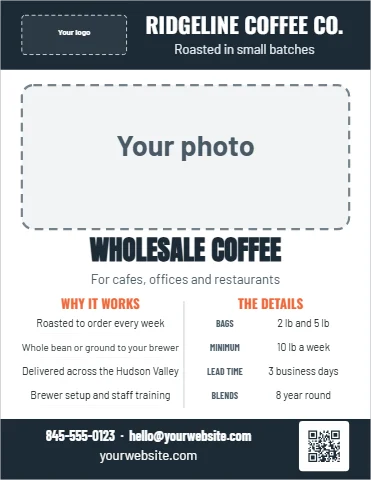
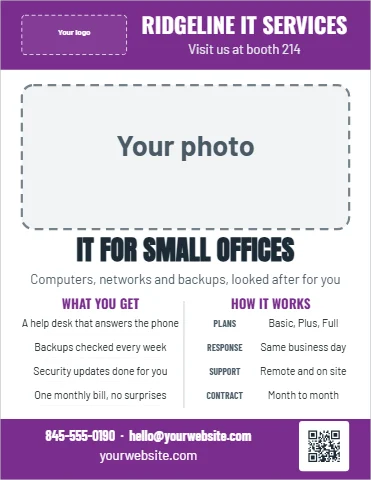
- Band and table: the company on a band, a photo, four reasons to buy and a small table of the details, with the contact and a QR code at the foot. For products, trades, trade shows, practices and farms.
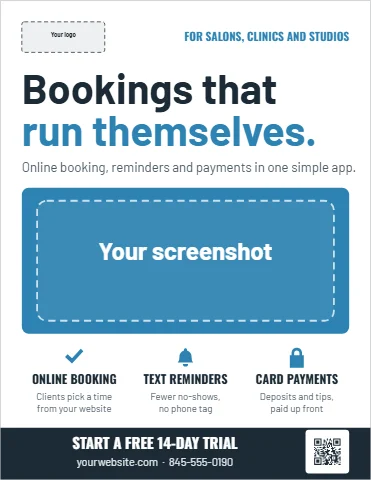
- One-pager: a headline set flush left, a screenshot on a color panel, three features with icons and a free trial offer. For software and apps.
- Sidebar: a navy column with your logo, who you serve and your contact, beside a serif headline, a photo and four numbered capabilities. For commercial services that bid on contracts.
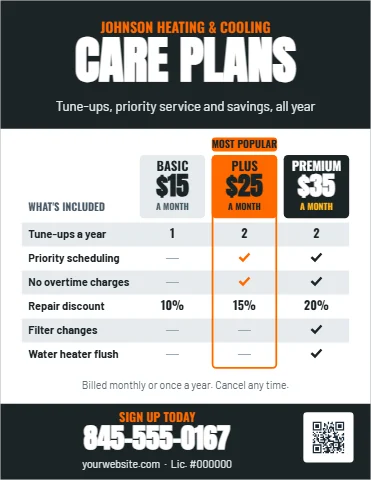
- Comparison: three plans side by side with the price on top, checks for what each includes, and the popular one framed. For maintenance plans and memberships.
Standing tall or laid wide
Every sell sheet here has both layouts. Standing tall suits a folder, a mailing envelope and a trade show table; laid wide puts the photo beside the points, which reads well on a screen when you send the file ahead of a meeting. On 11" × 17" the same sheet becomes a counter poster for the booth.
Write it for the buyer
Lead with the problem the buyer has, then the numbers that settle it: the minimum order, how fast you deliver, what the plans include. A spec table should hold facts a buyer would otherwise call about; if a number changes often, put it on your website and point the QR code there. Contractors: put your license number where the template shows one.
From the shop: Bring more sell sheets to the show than you think you need, and keep the file handy to email the same page after the meeting.